Strategy and growth: navigating uncertainty in 2026
.jpeg)

.png)
Introduction
In 2025, the professional services sector, including IT services companies, audit firms and consulting firms, entered a major structural turning point.
In 2026, uncertainty has become the new operating environment. Leaders are required to make decisions more frequently, with less visibility, amid growing pressure on margins, budgets and client expectations.
A) Rethinking business models in an unstable geo-economic environment
Growth across professional services firms is now slowing to below double digits. While recovery remains underway, economic and geopolitical instability, intensified competition and continued pressure on margins are significantly limiting growth opportunities.
Leaders must now build business models capable of operating sustainably in uncertain conditions.
“The main challenge today is economic uncertainty linked to both the French and international context.” — Florent Steck, Managing Director, Interpath
44% of European executives expect growth below 10% in 2026. While growth remains positive overall, it is now occurring in a far more moderate environment. This caution reflects both current economic and geopolitical uncertainty and the lasting effects of previous crises, which continue to weigh heavily on the sector.
As a result, 47% of European professional services firms have still not returned to their pre-2020 profitability levels.
In a highly constrained market, the challenge for professional services firms is now to execute faster and more efficiently. This shift requires breaking down silos at three levels:
- Breaking internal silos to accelerate execution,
- Combining expertise to create greater value,
- Opening organisations to broader ecosystems.
Growth drivers in professional services are progressively shifting towards more specialised, integrated and impact-oriented models.

B) Decisive leadership: making strategic decisions without visibility
In 2026, waiting for visibility to return is no longer a viable option for business leaders. Operating in an unstable environment has become the new normal, and strategic hesitation now represents a risk in itself.
Performance no longer depends on the strength of a fixed plan, but on the ability to rapidly adjust assumptions without losing direction. Companies are increasingly operating on shorter planning horizons, using rolling 12-to-18-month windows.
In this context, performance depends on three key factors:
- A precise understanding of short-term market dynamics,
- The ability to adapt quickly,
- Disciplined strategic management.
“Strategic trade-offs are now constantly reassessed and can be postponed at short notice depending on the context.” — Damien Lasou, Managing Director, Expleo
In this unstable environment, resisting strategic dispersion becomes essential.
“We must build on our strengths and focus our efforts on opportunities that are genuinely within our reach.” — Michael Girke, Partner, Wavestone
This logic does not apply to innovation, however, which remains a critical lever for increasing client value and strengthening market positioning in an increasingly demanding competitive environment.
In 2026, strategy is as much about deciding what to stop doing as it is about identifying new growth opportunities.
C) Market reshaping: towards a more concentrated, selective and demanding consulting market
The economic slowdown is making the professional services market even more competitive:
- A growing number of specialist firms,
- The rise of independent consultants and hybrid models,
- Increasing competition from technology solutions.
Market saturation is now primarily strategic: generalist positioning is losing value against highly specialised offerings.
“One clear trend is the significant hardening of the generalist market, contrasted with strong demand for deep expertise. Our major clients, facing current technological disruptions, increasingly require experienced experts to support these transformations, whether through consulting services or recruitment.” — Xavier Muller, President, SFEIR
Professional services firms are entering a phase of strategic refocusing and expertise reshaping. This evolution is reflected in workforce adjustments, renewed focus on core offerings and a slowdown in certain diversification initiatives.
At the same time, changing client expectations and the growing importance of technological capabilities are pushing firms to rethink and optimise their portfolio of services and talent.
Consolidation dynamics are also intensifying. The sector is becoming increasingly financialised as private equity investment in professional services firms continues to grow, further increasing existing pressures:
- Higher profitability expectations,
- Standardisation of management models,
- Faster strategic decisions regarding non-core activities.
“New network-based structures are emerging, while private equity is progressively becoming a dominant ownership model across Europe.” — Patrick Oelze, Partner, Grant Thornton
Large organisations are also investing in the internalisation of capabilities previously outsourced to consulting firms, reinforcing the need for professional services firms to sharpen their expertise and demonstrate genuine added value.
Clients are now looking for:
- Less long-term assistance,
- More targeted and strategic expertise,
- Greater differentiation and measurable added value.
Professional services firms are increasingly acting as accelerators and trusted advisors rather than simple execution providers.
Conclusion
2026 is shaping up to be a year of strategic refocusing for professional services firms. In a persistently uncertain environment, the most resilient players will be those capable of strengthening their core expertise, clarifying their positioning and building a clearly identifiable value proposition without spreading themselves too thin across opportunities.
Clients now expect partners capable of delivering tangible impact, accelerating execution and securing strategic decision-making: the challenge is to strengthen the impact of strategic consulting.
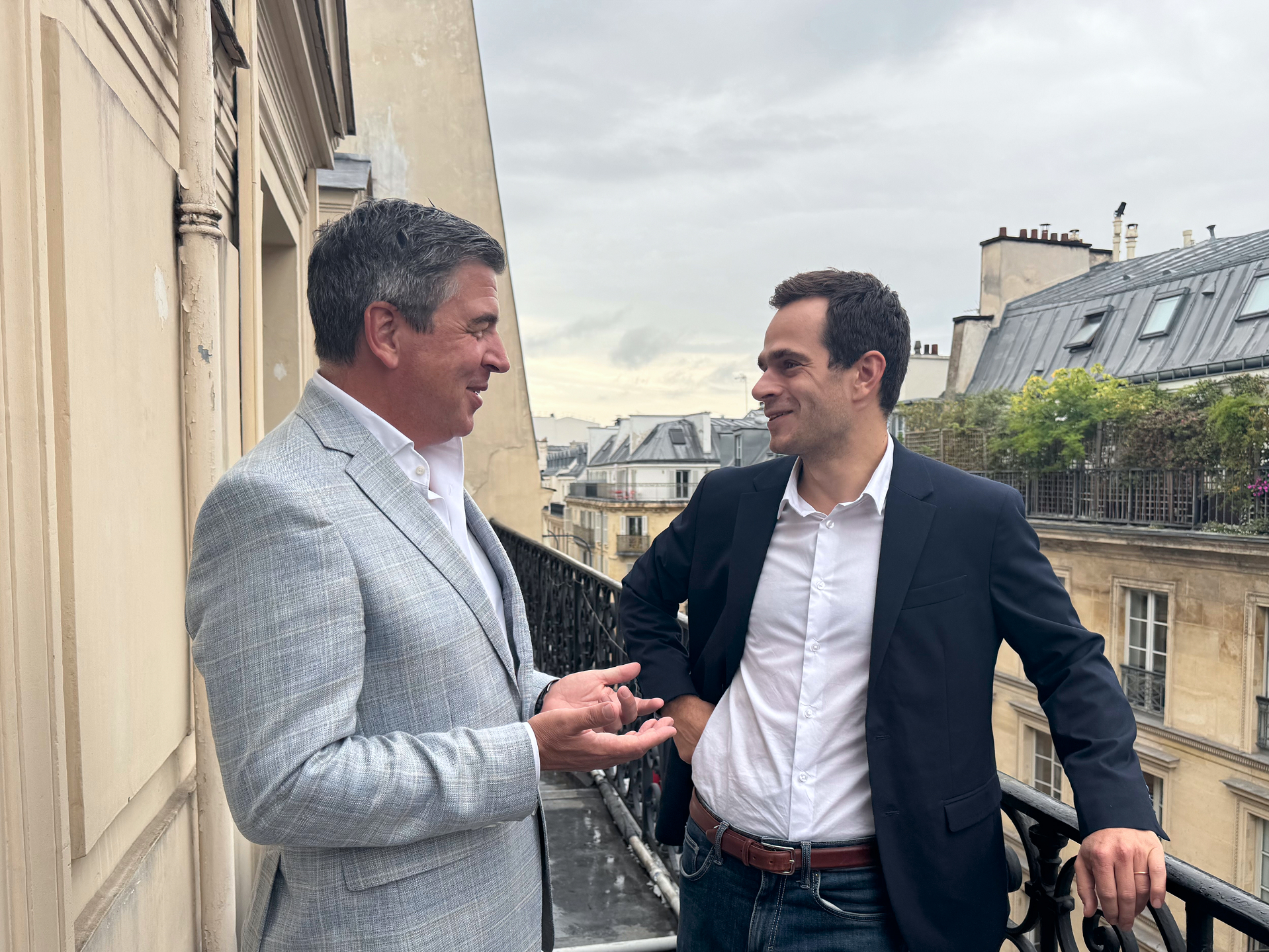
Unit4 to Acquire Napta and Accelerate Skills-Based Resource Management for Professional & Business Services Firms
Acquisition supports Unit4’s vision for growth through investment in its key verticals and Napta’s goal to become Europe’s champion for resource management.
.jpeg)
AI and professional services firms: moving from technological potential to economic impact
In 2026, AI is becoming a strategic lever for professional services firms. Discover how consulting, audit and IT services firms are turning AI into measurable economic impact.

How to have an effective staffing and a high level of employee engagement
Learn how to optimize staffing and employee engagement for increased productivity. From proven methods to the use of tools...
Explore more resources




Turn resource management into the best business outcomes
A 100% free and no-commitment meeting to understand what Napta can help you with.